
Prime Mover Hire Cost in Melbourne: What to Expect
Need a prime mover for a single job, or for a few weeks of steady work? Hiring is often more sensible than buying, and you don't have to recruit a driver of your own. The price, though, depends on several things, and it helps to know what they are before you ask for a quote.
This guide covers typical rates, what pushes the price up or down, and what to check before you sign anything.
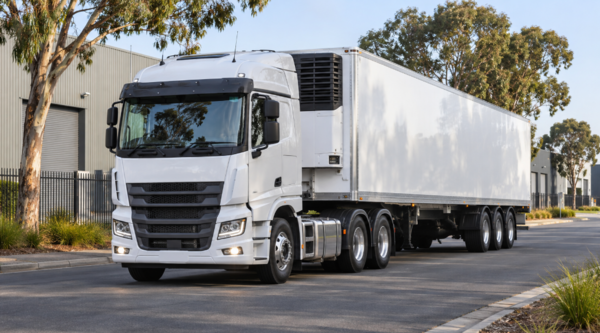
Prime mover hauling a semi-trailer on a Melbourne industrial road
How Much Does Prime Mover Hire Cost?
Most hire is charged by the day, by the week or by the trip. As a rough guide, these are the daily ranges you'll see across the market:
| Truck type | Typical work | Typical daily rate |
| Standard | General freight and single trailers | $400 to $600 |
| Heavy-duty | Heavier loads and construction haulage | $500 to $800 |
| Specialised | Oversized, multi-axle or specialist jobs | $600 to $900 |
These are typical ranges, not fixed prices, and they don't include GST. A heavier or more specialised truck will cost more, and a quote for a long run will look different from one for a short local job.
If your job runs for more than a few days, ask for a weekly rate. It usually works out cheaper per day than booking one day at a time.
Chart of typical daily prime mover hire rate ranges
To put that into practice: a standard prime mover on a three-day local job would typically land somewhere around $1,200 to $1,800 before GST, depending on the rate, the distance and whether fuel is included. Always check that last point, because it can change the total quite a bit.
What Makes Up the Price
A supplier has to cover three main costs, and your quote is built from them:
- Fixed costs such as registration, insurance, finance and overheads. These are paid whether the truck is working or sitting in the yard.
- Running costs such as fuel, tyres, repairs and servicing. These rise with distance and use.
- The driver, including wages, allowances and the time spent on safety and compliance checks.
That's why two quotes for the same job can look quite different. One may include fuel and the driver, while the other charges for them separately. Always ask what's covered.
What Changes Your Quote
Distance and driving time
Longer trips use more fuel, more driver hours and more of the truck. A normal working day allows about 7.6 driving hours. If a run goes past that, or needs a second driver, expect extra charges. Grouping loads into fewer, fuller trips helps keep the cost down.
What you're moving
Palletised freight on a flatbed is straightforward. Hauling an excavator on a low loader takes more planning. Heavy or oversized loads can need permits, escort vehicles and slower travel, and all of that adds to the bill. Give the supplier the weight and dimensions up front so the quote is accurate from the start.
When the work happens
Early starts, night runs, weekends and emergency call-outs usually attract a premium. If your schedule has any flexibility, booking during standard hours is one of the easiest ways to save money.
Fuel prices
Diesel feeds straight into operating costs, so a price rise can change your hire rate. Ask whether the quote is fixed for the whole hire period or whether fuel is charged separately.
Wet hire or dry hire
Most businesses hire wet. That means the supplier provides the truck, the driver, fuel and maintenance. Dry hire, where you supply your own licensed driver and take on the operating side yourself, is less common because of the safety, licensing and liability involved. For most jobs, wet hire is the simpler and more predictable option.
Hire or Buy?
Owning a prime mover only pays off if it's busy for most of the year. Otherwise you're still paying registration, insurance and finance while it sits idle. Hiring suits seasonal peaks, one-off projects and times when your own truck is off the road for servicing.
A quick way to decide is to estimate how many days you'd need a truck over the next twelve months, multiply that by the hire rate, and compare the total with the yearly cost of owning and running one. If hiring comes out lower, hire.
When to Book
Book as early as you can. Trucks are most in demand on Mondays, at the end of the month and in the lead-up to public holidays, and the best-value rates tend to go to customers who plan ahead. For a planned job, booking one to two weeks out gives you the best choice of truck and driver. For a job that's already on the calendar but might shift, ask the supplier how flexible the booking is and what happens if the date changes.
Short-notice work is still possible, but expect less choice on truck type and a higher rate for urgent or after-hours cover. If you know a job is coming, a quick call to lock in a provisional booking can save a lot of stress later.
Licences and Compliance
A prime mover pulling a semi-trailer is an articulated vehicle, and the driver normally needs a Heavy Combination (HC) licence. A Heavy Rigid (HR) licence covers rigid trucks only, so check the licence class before you assign a driver to the job. Service Victoria has the full details.
A reliable supplier should be able to show you their fatigue management practices, load restraint procedures, maintenance records and proof of insurance. It's reasonable to ask for all four, especially for high-value or oversized loads.
What to Ask For in a Quote
Before you accept a quote, check that it covers:
- The truck type, such as single drive, bogie drive or B-double rated
- Whether the driver, fuel and insurance are included
- The day, week or trip rate, and any minimum hire period
- How many kilometres are included, and what's charged beyond that
- Extra charges for after-hours, weekend or emergency work
- Any escorts, permits or route approvals you'll need
A cheap quote that leaves these points out often ends up costing more by the end of the job.
Getting a Quote Faster
Having a few details ready means you'll get a realistic price on the first call:
- The load type, its weight and its dimensions, plus any trailer requirements
- Pickup and drop-off addresses, and any site access limits
- The date, the time window and how long you need the truck
- Whether it's a one-off trip, a short contract or ongoing work
- Any loading equipment needed at either end
Prime Mover Hire with OFE Refrigerated
OFE Refrigerated Transport runs prime movers for contract and one-off work across Melbourne and interstate. Our fleet includes single drive, bogie drive and B-double rated trucks, so you get the right truck for the load rather than paying for more than you need.
Every truck has GPS tracking and sign-on-glass, so you can see where your load is at any time. Our drivers are fully trained and follow OHS requirements. If a truck breaks down or you need cover at short notice, we can usually get a replacement driver and truck to you within hours, at any time of day.
If your freight needs to stay chilled, take a look at our refrigerated vehicles and chilled and freezer transport. If the site has no dock or forklift, our tailgate loaders can unload quickly without extra equipment.
To get a price, request a prime mover quote or call us on 03 9768 2254.
Frequently Asked Questions
How much does it cost to hire a prime mover per day?
Typical daily rates run from about $400 for a standard truck to around $900 for a specialised one, excluding GST. The final price depends on distance, the load and whether you're hiring wet or dry.
Is it cheaper to hire by the week?
Usually, yes. A weekly rate tends to come in lower than several single days booked back to back.
Does the hire include a driver?
With wet hire, yes. The driver, truck, fuel and maintenance are all covered. Confirm this in writing before you book.
What licence do I need to drive a prime mover?
Most articulated prime movers need a Heavy Combination (HC) licence. Check the vehicle class and confirm the requirements with Service Victoria.
Can I get a prime mover at short notice?
Yes. Call 03 9768 2254, explain how urgent the job is, and we'll let you know what we can send.
Ready to Get a Price?
Send us your job details and we'll come back with a clear, itemised quote. Contact OFE Refrigerated to start.